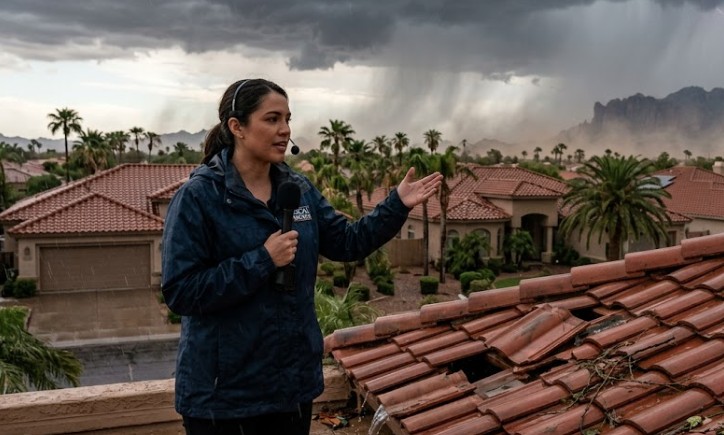
COMPLETE REVISED BLOG POST – READY TO PUBLISH
PAGE TITLE (For WordPress)
Phoenix East Valley Monsoon Roof Damage: Mesa, Chandler & Gilbert Homeowners’ Complete Guide
META DESCRIPTION
Monsoon roof damage in Mesa, Chandler & Gilbert? Learn what to do in 48 hours, how to file insurance claims, and prevent damage. Licensed East Valley contractor guide.
URL SLUG
/monsoon-roof-damage-arizona/
Phoenix East Valley Monsoon Roof Damage: Mesa, Chandler & Gilbert Homeowners’ Complete Guide
TL;DR
If you own a home in Mesa, Chandler, Gilbert, Queen Creek, Apache Junction, or Tempe in the Phoenix East Valley, monsoon roof damage means 40-60+ mph winds that rip shingles, crack tiles, and drive rain into flashing gaps. East Valley homes face harsher monsoon roof damage than Phoenix because of our desert geography and altitude. Therefore, catch damage within 48 hours, document everything with photos, hire a licensed Phoenix East Valley contractor (not out-of-state storm chasers), and file your insurance claim immediately. Additionally, avoid predatory contractors who swarm our area after haboobs. Pre-monsoon maintenance and proper installation prevent 80% of monsoon roof damage.
Why Phoenix East Valley Monsoons Destroy Roofs Harder Than the Rest of Arizona
You live in one of the harshest roofing climates in Arizona. Here’s why monsoon roof damage is more severe in the East Valley.
If you own a home in Mesa, Chandler, Gilbert, Queen Creek, Apache Junction, or Tempe, you already know what monsoon roof damage looks like. That green wall of dust rolling east across the Phoenix Valley. 50+ mph winds that shake your house. The sound of debris hitting your roof. That moment when you think, “Please don’t let my roof get destroyed.”
The Phoenix East Valley gets hit harder than other parts of Arizona—and geography is the primary reason. According to the National Roofing Contractors Association (NRCA), desert climates face unique roofing challenges. Our location on the desert floor at the base of the Superstition and San Tan mountain ranges means monsoon roof damage rolls straight through with zero obstruction. Meanwhile, winds accelerate across the Valley floor because there’s nothing stopping them. Unlike Scottsdale or Phoenix proper—which have mountain ridges and more urban density to break up wind—the East Valley sits exposed. When a monsoon hits, it hits hard.
Altitude Makes It Worse
Elevation compounds the problem significantly in terms of monsoon roof damage risk. Queen Creek and Apache Junction sit higher than Mesa and Chandler. Higher altitude = thinner air = wind moves faster and causes more severe monsoon roof damage. Consequently, roofing materials installed for “normal” Arizona conditions get tested beyond their limits by monsoon roof damage in these areas.
The Heat Factor
Before monsoon roof damage happens, something else happens: extreme heat. Your Phoenix East Valley roof bakes at 110-120°F for months. During this time, materials expand, sealants dry out, and flashing gets loose. Then monsoon season hits—and your already-stressed roof takes the impact from monsoon roof damage. That’s a one-two punch other Arizona areas don’t face as severely.
Furthermore, out-of-state storm chasers love our area. After monsoons hit Mesa, Chandler, or Gilbert, contractors from Nevada and California flood neighborhoods with flyers. They install roofs with shortcuts to move fast and collect insurance quickly. Consequently, when the next monsoon comes, those shortcut roofs fail spectacularly. We see this constantly in the East Valley.
How Monsoon Winds Damage Your Roof
Two specific mechanisms cause monsoon roof damage to Phoenix East Valley roofs:
Wind lifts and peels causing monsoon roof damage. When a haboob hits your East Valley home, wind pressure gets under shingles, tiles, or foam coatings and pulls them up. Even tiny installation gaps become major entry points for water—and monsoon roof damage. Improperly fastened tiles get lifted. Shingles nailed incorrectly begin peeling. Foam coating with poor edge seals tears open.
Wind drives rain sideways causing severe monsoon roof damage. Normal roof designs handle rain coming straight down. However, monsoon rain in the Phoenix East Valley comes at 50-60 degree angles at 50+ mph. This sideways rain gets under flashing, into roof valleys, behind fascia boards, and into every spot where installation corners were cut—all sources of monsoon roof damage.
The real difference preventing monsoon roof damage? A properly installed tile roof (common in Chandler and Gilbert) handles monsoons fine. In contrast, a 20-year-old shingle roof with cheap workmanship leads to disaster—especially in Mesa where monsoon roof damage to older neighborhoods is common.
Common Monsoon Roof Damage Signs in Phoenix East Valley Homes
After a monsoon hits your East Valley home, knowing what to look for is critical. Here’s exactly what to check:
Outside Damage Indicators
Several warning signs appear on the exterior of your roof:
- Shingles that are lifted, cracked, or missing entirely (we see this constantly in older Mesa neighborhoods)
- Tile pieces on the ground or in gutters (common in Chandler and Gilbert)
- Flashing separated from walls or roof line (the Phoenix East Valley heat causes this failure)
- Gaps or holes in foam coating (if you have a flat roof in Apache Junction or Tempe commercial properties)
- Fascia board that’s peeling, cracked, or detached (our desert sun dries this out faster than anywhere else in Arizona)
- Gutters pulling away from the house or jammed with monsoon debris (East Valley dust accumulation is brutal)
- Roof penetrations (vents, pipes, skylights) with loose or missing sealant
Inside Damage (Often Missed)
Meanwhile, damage inside your home is often overlooked—and this is critical. Check your attic for these indicators:
- Water stains on ceilings or walls
- Damp insulation in the attic (in Phoenix East Valley heat, this hides damage initially—check 3-5 days after the storm)
- Soft spots in drywall or plaster
- Musty smell from the attic (indicates water is sitting there, and mold is growing)
- Peeling paint or bubbling wall texture
- Dark spots on attic wood framing (shows water has been present for a while)
The Critical 3-5 Day Window
Here’s the part most homeowners don’t understand: our extreme heat can hide damage initially. Water sits in insulation, heat dries it partially, then overnight temperature drops cause condensation to form. Therefore, check your attic 3-5 days after a monsoon—not just the next day. This timing reveals the real damage that would otherwise go unnoticed.
What to Do Immediately After a Monsoon in Phoenix East Valley
Time is critical after a monsoon. Here’s your action plan in order:
Step 1: Get a Licensed East Valley Inspection Within 48 Hours
Call a licensed Phoenix East Valley roofer immediately—not a storm chaser from California or Nevada.
Here’s what typically happens after monsoons: Out-of-state contractors roll into neighborhoods with flyers. Many aren’t licensed in Arizona. Additionally, many install cheap work to move fast and collect insurance money quickly. When the next monsoon hits (and it will), those shortcuts fail spectacularly.
Stick with licensed East Valley contractors who:
- Have Arizona ROC licenses (verify here)
- Are based locally (not traveling from out of state)
- Understand Phoenix East Valley weather specifically
- Have local references you can call
Step 2: Document Everything With Dated Photos
Before cleanup begins:
- Photograph all visible damage (wide shots + close-ups)
- Shoot from multiple angles if safe to do so
- Write down exactly what you see and when damage occurred
- Document weather (wind speed if you know it, hail, rain amount)
- Capture your roof from ground level with your phone’s timestamp
Insurance companies will not pay without documentation. Photos serve as proof. Without them, adjusters deny or low-ball your claim. This step alone determines whether you get paid fairly.
Step 3: File Your Insurance Claim Within 48 Hours
Contact your insurance company immediately—don’t wait a week. Provide:
- Your photos and professional inspection report
- Detailed damage description
- Date and time of storm
- Professional contractor’s assessment
Insurance policies require claims within 1-2 years, but file NOW while everything is fresh and documented.
Step 4: Avoid These Costly Mistakes
Several errors are common in the Phoenix East Valley after monsoons:
Don’t hire the first contractor who knocks. Storm chasers swarm Mesa, Chandler, and Gilbert after every monsoon. Instead, get 2-3 inspections from licensed locals to compare pricing and assessments.
Ignoring “small” damage is a mistake. One missing shingle becomes a $5,000-$8,000 water problem in 2-3 weeks. The damage accelerates faster in Phoenix East Valley heat than anywhere else.
Filing without professional documentation backfires. Insurance denies claims based on homeowner photos alone. Get a licensed contractor’s detailed report instead.
Assuming full coverage will happen is wrong. Poor maintenance or previous workmanship failures aren’t covered by insurance. Pre-existing age-related issues don’t qualify either.
Watch out for “we’ll pay your deductible” offers. It’s illegal. Contractors offering this are running scams and will disappear after getting paid.
Delaying repairs costs you dearly. Water damage accelerates in Phoenix East Valley heat. What costs $3,000 in week 1 costs $10,000+ by week 4. Mold grows in days here, making it a serious health issue.
Which Roofing System Handles Phoenix East Valley Monsoons Best?
Not all roofing materials are created equal. Here’s what performs in our climate:
Asphalt Shingle Roofing (Common in Older Mesa & Apache Junction)
Monsoon performance: Good if installed right, poor if not.
This system works when: shingles nailed correctly, solid underlayment, sealed flashing, proper roof slope.
It fails when: cheap installation skips proper nailing or underlayment (we see this often in post-storm installations).
Wind rating: 130+ mph (with proper installation)
Phoenix East Valley specific: Shingles take a beating from 110-120°F heat in our region. UV damage accelerates significantly. Combined with monsoon wind, aging shingle roofs in Mesa and Apache Junction are particularly vulnerable to monsoon roof damage. A 15-year-old shingle roof here is just as prone to monsoon roof damage as a 20-year-old roof elsewhere.
Lifespan in Phoenix East Valley: 12-15 years before monsoon roof damage typically occurs vs. 15-20 years in moderate climates.
Concrete Tile Roofing (Popular in Chandler & Gilbert)
Monsoon performance: Excellent if properly installed.
Heavy, impact-resistant, and aerodynamic—wind can’t lift properly installed tile. However, installation details are everything here. Tiles must be: fastened with proper hardware, underlayed correctly, sealed at all penetrations.
Wind rating: 150+ mph (with proper installation)
Phoenix East Valley specific: Tile is ideal for preventing monsoon roof damage in our climate. It handles extreme heat, UV, wind, and hail exceptionally well. That said, we see problems when older Chandler and Gilbert tile roofs (installed 20+ years ago) weren’t fastened properly, leading to monsoon roof damage. Quality installation matters more than material choice for preventing monsoon roof damage.
Lifespan in Phoenix East Valley: 25-40+ years if installed right. We’re seeing 50+ year old tile roofs still performing in Chandler neighborhoods.
Foam Coating (Spray Polyurethane Foam & Elastomeric)
Monsoon performance: Excellent if maintained.
Seamless application means no gaps, no lifted materials, no fasteners to fail. Wind can’t “grab” anything to tear. Additionally, it provides excellent insulation (critical in Phoenix East Valley heat where cooling costs are substantial).
Maintenance is required though. UV degrades coatings over time in our harsh sun.
Wind rating: 120+ mph (with proper installation)
Phoenix East Valley specific: Foam works great here. The seamless application handles monsoons effectively. However, our brutal sun degrades elastomeric coatings faster than cooler climates. You’ll need recoating every 10-12 years in the East Valley (vs. 15 years elsewhere). The re-coating investment is worth it because foam is so effective in our climate.
Lifespan in Phoenix East Valley: Initial coating lasts 10-12 years before re-coat needed. Foam substrate lasts 25-30+ years.
Flat Roofing (Commercial Buildings in Apache Junction, Tempe, Chandler)
Monsoon performance: Varies based on membrane quality and installation.
This system works when: membrane intact, edges sealed, drains clear, no pooling water. It fails when: membrane cracked, flashing lifting, drains blocked, water pooling on roof.
Wind rating: 100-130+ mph (depends on system type)
Phoenix East Valley specific: Flat roofs need aggressive maintenance in our climate. Heat accelerates membrane degradation significantly. We see failures in Tempe and Chandler commercial properties around year 15-20 if not maintained. Regular inspections and sealant maintenance prevent 90% of flat roof problems.
Lifespan in Phoenix East Valley: 15-20 years for typical TPO/EPDM membrane. Longer with regular maintenance.
How to Navigate Insurance Claims for Phoenix East Valley Monsoon Damage
This is where homeowners get stuck. Here’s the real process:
Get a Detailed Professional Inspection Report
Hire a licensed Phoenix East Valley inspector who provides:
- Detailed photos with location annotations
- Description of each damaged area with measurements
- Assessment of cause (wind, hail, age-related, workmanship failure)
- Repair estimate AND replacement estimate
- Timeline for damage (recent vs. pre-existing)
Why this matters: Insurance adjusters trust licensed contractor reports. They understand Phoenix East Valley market rates and materials. A report from a licensed local contractor carries significant weight with insurance companies.
Understand Exactly What Your Policy Covers
Typically covered:
- Wind damage (monsoons qualify)
- Hail damage (common in East Valley monsoons)
- Water damage directly from the storm
Typically NOT covered:
- Damage from poor maintenance (leaves in gutters, no sealant touch-ups)
- Damage from previous workmanship failures (shortcuts from storm-chaser installs)
- Age-related deterioration (a 25-year-old roof failing is “age,” not storm damage)
- Damage from DIY repairs or unpermitted work
Know Your Deductible (And Costs)
Typical Phoenix East Valley deductible: $500-$2,000
Your portion: Pay deductible (your responsibility)
Insurance pays: The rest (usually 80-100% after deductible)
Total repair costs in Phoenix East Valley:
- Small repairs: $200-$500
- Partial replacement: $2,000-$4,000
- Full replacement: $8,000-$25,000+ (East Valley pricing is higher than national average)
Avoid Storm Chaser Red Flags
After monsoons, watch for these warning signs carefully:
- Contractors guaranteeing you won’t pay your deductible (this is illegal)
- High-pressure signing before you understand the contract
- Claims to be “insurance adjusters” without license
- Offers to “handle everything” then disappear after payment
- “Work for free, get paid by insurance” offers (often unlicensed)
- Out-of-state phone numbers or addresses
- No Arizona ROC license (verify here)
What you should do: Verify every contractor’s license before signing anything. Call the Arizona Registrar of Contractors directly to check ROC numbers and licensing status. Ask for references in your neighborhood (Mesa, Chandler, Gilbert—not out-of-state).
Monsoon Roof Damage: Repair vs. Replacement
The decision depends on several key factors:
Repair if:
- Damage is isolated to one section of roof
- Roof is less than 15 years old
- Only a few shingles or tiles affected
- Roof was properly installed originally (not by a storm chaser)
Replace if:
- Damage is widespread across multiple sections
- Roof is 20+ years old (Phoenix East Valley heat ages roofs faster)
- You’ve had recurring leaks or problems
- Repair cost exceeds 60% of replacement cost
- Previous installation had shortcuts (common in East Valley)
Phoenix East Valley reality: Our extreme heat accelerates aging. A 15-year-old roof here behaves like a 20-year-old roof in Phoenix proper. Factor this into your decision.
Pre-Monsoon Preparation for Phoenix East Valley Homeowners
Preparation now prevents disaster later. Here’s your comprehensive checklist:
Schedule a Pre-Monsoon Inspection (Late May/Early June)
Before storm season arrives, hire a licensed Phoenix East Valley inspector to:
- Check for existing vulnerabilities
- Test flashing and sealant integrity
- Spot damage from previous storms
- Recommend preventative repairs
- Document current roof condition
Cost: $200-$400. Savings: $5,000-$15,000 in prevented damage. This investment pays for itself many times over.
Refresh Flashing and Sealant Now
Flashing and sealant are your roof’s weak points—especially in Phoenix East Valley where UV and heat degrade sealant 30-40% faster than other regions. Check around:
- Roof vents and pipes
- Wall transitions
- Skylights
- Gutters and fascia connections
If sealant is cracked, hard, or missing—replace it immediately. Cost: $200-$500. Damage if you don’t: $3,000-$8,000.
Clear Away Overhanging Branches
Monsoon winds snap tree limbs off. Subsequently, branches over your roof puncture shingles or foam coating during storms. Back off branches now before monsoon season arrives.
(Note: East Valley doesn’t have as many trees as Phoenix, but where you do have them, trim them aggressively.)
Clean Out Gutters Thoroughly
East Valley dust accumulation is intense throughout the year. Debris-filled gutters back up water during monsoon rain, forcing water under shingles and into attics. Clean gutters in late May before season hits. Don’t skip this step.
Examine Fascia and Soffits
Fascia takes a beating from heat and wind in our climate. If it’s soft, cracked, pulling away, or showing wood rot—replace it now. Damaged fascia is a direct entry point for water. Cost to replace: $500-$1,500. Cost of water damage if you don’t: $5,000+.
Document Your Roof’s Baseline Condition
Take dated photos of:
- Overall roof condition
- Close-ups of any existing damage or wear
- Flashing and sealant condition
- Fascia and soffit condition
- Gutter condition
If monsoon damage occurs, you can prove what was there before. This documentation helps insurance claims significantly.
Verify Installation Quality (If Recently Installed)
If your roof was installed in the last 5 years by a storm-chaser contractor (common in East Valley), get a licensed inspector to verify the work. Look for:
- Proper nailing patterns throughout
- Adequate underlayment coverage
- Sealed flashing at all penetrations
- Proper fastening on tiles
Finding shortcuts now saves you heartache in the next monsoon.
KEY TAKEAWAYS for Phoenix East Valley Homeowners
✓ East Valley monsoons are fiercer. Geography and altitude mean we get hit harder than Phoenix proper. Expect monsoon roof damage other Arizona areas don’t experience.
✓ Damage isn’t always obvious immediately. Check your attic 3-5 days after monsoon roof damage occurs. Our heat hides damage initially, then reveals it as temperatures drop. Mold grows fast in our heat after monsoon roof damage.
✓ Documentation wins insurance claims. Photos + licensed contractor inspection report = approved claim. No documentation = denied or low-ball claim.
✓ Hire local, licensed contractors. Avoid storm chasers entirely. Verify ROC license before signing anything. East Valley has been targeted by fraudulent operators after every monsoon for 10+ years.
✓ File your claim within 48 hours. Speed matters significantly. Insurance needs fresh damage assessment and documentation.
✓ Installation quality matters more than material. A $5,000 properly installed shingle roof handles monsoons. A $8,000 poorly installed tile roof doesn’t.
✓ East Valley heat accelerates everything. Aging, degradation, mold growth, water damage all happen faster here. What costs $3,000 to fix in week 1 costs $10,000+ by week 3. Don’t delay.
✓ Pre-monsoon maintenance prevents 80% of damage. Flashing checks, sealant touch-ups, debris clearing. Small investments prevent catastrophic damage.
✓ Your roof’s lifespan here is shorter. Arizona East Valley roofs age 25-30% faster than other climates. Plan accordingly.
FAQs for Phoenix East Valley Homeowners
Why does monsoon season hit the East Valley harder than Phoenix?
Geography explains this monsoon roof damage pattern clearly. The East Valley sits on the desert floor at the base of mountain ranges with nothing to break up wind speed. Phoenix, meanwhile, has more urban density and mountain ridges that slow wind. Additionally, Queen Creek and Apache Junction sit higher in altitude—wind moves faster and causes more severe monsoon roof damage there. Result: East Valley homeowners face more severe monsoon roof damage than Phoenix proper.
My roof was installed by a storm chaser after the last monsoon. Should I be worried?
Yes, probably. We see a lot of shortcuts in post-storm East Valley installations. Contractors rushing to complete jobs cut corners on underlayment, use improper fastening, and apply inadequate sealant. Get a licensed Phoenix East Valley inspector to verify the installation before next monsoon season. Cost: $300. Potential savings: $10,000+.
How often should I inspect my roof in the Phoenix East Valley?
Minimum: Once per year before monsoon season (late May).
Recommended: Twice per year—once before monsoon (May-June) and once after heavy storms hit.
Best practice: After any significant monsoon event, get an inspection. Document everything for insurance purposes.
Our home is in Queen Creek or Apache Junction (higher elevation). Is our roof at more risk?
Yes, somewhat. Higher elevation means thinner air, which allows wind to move faster through. Your roof faces slightly higher wind speeds than Mesa or Chandler. This is factored into proper installations but worth noting. Ensure your roof is installed to handle 150+ mph winds.
How much will my insurance deductible be?
Typically $500-$2,000 depending on your policy. Some policies have percentage-based deductibles (1-5% of home value). Check your policy documents immediately. After you pay the deductible, insurance covers the rest.
What if my roof was already old? Will insurance still cover monsoon damage?
Maybe. If your roof was aging but functional, and the monsoon caused new damage, insurance usually covers the storm damage. However, if your roof was already failing (leaking before the monsoon), insurance might deny it. According to the Arizona Department of Insurance, insurance companies require clear documentation of storm-caused damage vs. pre-existing conditions. This is why professional documentation is critical—we can prove what’s monsoon roof damage vs. what was pre-existing.
How fast does water damage spread after monsoon roof damage?
Extremely fast here. Our heat accelerates everything significantly after monsoon roof damage occurs. Wet insulation loses R-value immediately (affecting your cooling costs). Mold grows in 2-3 days following monsoon roof damage in our heat and humidity. What costs $3,000 to fix from monsoon roof damage in week 1 costs $10,000+ by week 3. Don’t wait.
Should I repair or replace after monsoon damage?
Depends on scope and age. Localized damage on a newer roof = repair. Widespread damage on a 20+ year old roof (which behaves like a 25+ year old roof elsewhere) = replacement. Phoenix East Valley heat ages roofs faster—factor this in.
Why is East Valley roofing more expensive than other Arizona areas?
Three reasons exist: (1) Material costs are higher due to demand, (2) Labor costs are higher due to shortage of quality contractors, (3) Heat-resistant materials and specialized installation techniques required for our extreme climate. Expect 10-20% higher costs than Phoenix or Tucson.
Why The Arizona Roofer Stands Apart for Phoenix East Valley Homeowners
We’re not new to the East Valley. We’re from the East Valley.
40 years of roofing experience across Phoenix East Valley means we’ve seen every monsoon since the 1980s. We know which roofing failures are common. We know which contractors cut corners. We know what happens when cheap installations meet monsoon season.
We understand Phoenix East Valley’s unique challenges:
- Extreme heat acceleration of damage and aging
- Geographic wind patterns (we understand why East Valley gets hit harder)
- Altitude factors in higher elevations (Queen Creek, Apache Junction)
- Post-storm contractor scams targeting Mesa, Chandler, and Gilbert
- Insurance adjuster expectations specific to our region
We find damage others miss. Especially problems from previous storm-chaser installations. We inspect looking for problems because we know where they hide.
We work with your insurance company. Our detailed inspection reports satisfy adjusters. We coordinate directly with your adjuster. You don’t play middle man.
We don’t cut corners. After monsoons, we’re slammed. We still do every inspection right. No shortcuts. We’ve built our reputation on honesty—not volume.
We do work built to last. Our installations handle the next monsoon and the one after that. We’re not here to sell temporary band-aids or cut-rate jobs that fail in a year.
Licensed and certified in Arizona:
- ROC License
#352286񗵹(verify anytime) - NCCER Master Trainer
- NRCA Subject Matter Expert
- Expert witness in roofing disputes
- 10-year labor warranty on all work
- $30,000 deposit protection through Directorii
- BBB Accredited (A+ rating)
- Directorii Certified contractor
We serve the entire Phoenix East Valley:
- Mesa
- Chandler
- Gilbert
- Queen Creek
- Apache Junction
- Tempe
- Surrounding areas
Get Your Phoenix East Valley Roof Protected Now
Don’t let monsoon roof damage become a financial disaster.
If you live anywhere in the Phoenix East Valley—Mesa, Chandler, Gilbert, Queen Creek, Apache Junction, or Tempe—get a professional assessment from someone who actually understands our climate and our area’s unique monsoon roof damage challenges.
Every day you wait after monsoon season hits, water damage accelerates. Mold grows. Wood framing rots. What costs $3,000 to fix in week 1 costs $10,000+ by week 4.
Get a free monsoon roof damage assessment. We’ll inspect your roof, document what we find, and give you a clear report and estimate. No pressure. No sales pitch. Just honest answers about your monsoon roof damage.
Schedule Your Free East Valley Monsoon Damage Assessment
Call us today: (480) 435-5210
Text us: (480) 435-5210
Email: info@thearizonaroofer.com
We’re Available 24/7 for Emergencies
If a monsoon just hit your East Valley home and you have active leaks or visible monsoon roof damage, call immediately. We can get tarps deployed and your property protected the same day. No waiting. No runaround.
Our service area: Mesa, Chandler, Gilbert, Queen Creek, Apache Junction, Tempe, and all surrounding Phoenix East Valley communities.
What to Expect When You Call
✓ Free inspection (no obligation, no hidden fees)
✓ Detailed photo report of your roof’s condition and monsoon roof damage assessment
✓ Clear, honest assessment (no sales pitch, no pressure)
✓ Insurance claim guidance if needed (we work with your adjuster)
✓ Repair or replacement options with transparent pricing
✓ 10-year warranty on all work
Why East Valley Homeowners Trust The Arizona Roofer
40+ years of experience. We’ve seen every monsoon since the 1980s. We know monsoon roof damage patterns. We know which shortcuts fail. We know what insurance adjusters need.
Licensed and certified in Arizona:
- ROC License
#352286񗵹 - NCCER Master Trainer
- NRCA Subject Matter Expert
- Expert witness in roofing disputes
- BBB Accredited (A+ rating)
- Directorii Certified ($30,000 deposit protection)
- 10-year labor warranty
We’re local. Not a national chain. Not out-of-state storm chasers. We’re based right here in the East Valley, and we understand monsoon roof damage like no one else.
Stop Worrying About Monsoon Roof Damage. Get It Fixed Right.
Available 24/7 for emergencies. Same-day tarping. Professional inspections. Insurance coordination. Your peace of mind is our priority.