
By The Arizona Roofer – “Done right and monsoon tight.”
When the skies open up in the Phoenix Valley, they don’t mess around. Monsoon season brings pounding rain, fierce winds, hail, and flying debris — and your roof takes the brunt of it. What might look like just another summer storm can actually leave behind serious hidden damage that shortens your roof’s life or leads to leaks months later.
As someone who’s inspected thousands of Arizona roofs after monsoons, I can tell you: the sooner you spot damage, the cheaper and easier it is to fix. Waiting until the next rainstorm exposes the problem often means more damage, higher repair costs, and potential interior issues like mold or drywall damage.
Here’s how to recognize monsoon-related roof damage before it turns into a major headache.
1. Look for Missing or Broken Tiles and Shingles

High winds can lift or crack tiles and shingles, especially along ridges and edges. From the ground, you may notice uneven lines, exposed underlayment, or pieces of roofing material on the ground. Even a single missing tile can let water seep underneath — and Arizona’s intense UV rays will quickly dry and crack that exposed underlayment.
If you see anything out of place, don’t wait. A simple repair now can save you thousands later.
2. Check for Debris Buildup
Branches, leaves, and dirt can pile up in roof valleys, gutters, and behind chimneys during storms. That debris holds moisture, which can break down coatings and underlayment. It can also clog drainage, leading to standing water that seeps into small cracks or openings.
After a storm, clear your gutters and roof valleys — or have a professional do it safely.
3. Inspect Ceilings and Attics for Water Spots

Sometimes the first sign of monsoon roof damage shows up inside your home. Water stains on ceilings, bubbling paint, or damp insulation in the attic usually mean water has found a way in. Even small leaks can travel far from the actual roof entry point, so a professional inspection is key to finding the true source.
4. Look for Bent Flashing or Loose Seals
Flashing — the metal pieces that seal roof edges, vents, and valleys — can lift or warp during heavy winds. Once that happens, water finds its way underneath. It’s also common for sealant around vents and skylights to crack under UV exposure, then fail when heavy rain hits.
If you notice lifted flashing or cracked caulking, it’s time to reseal or replace those sections.
5. Examine Flat Roofs for Ponding Water
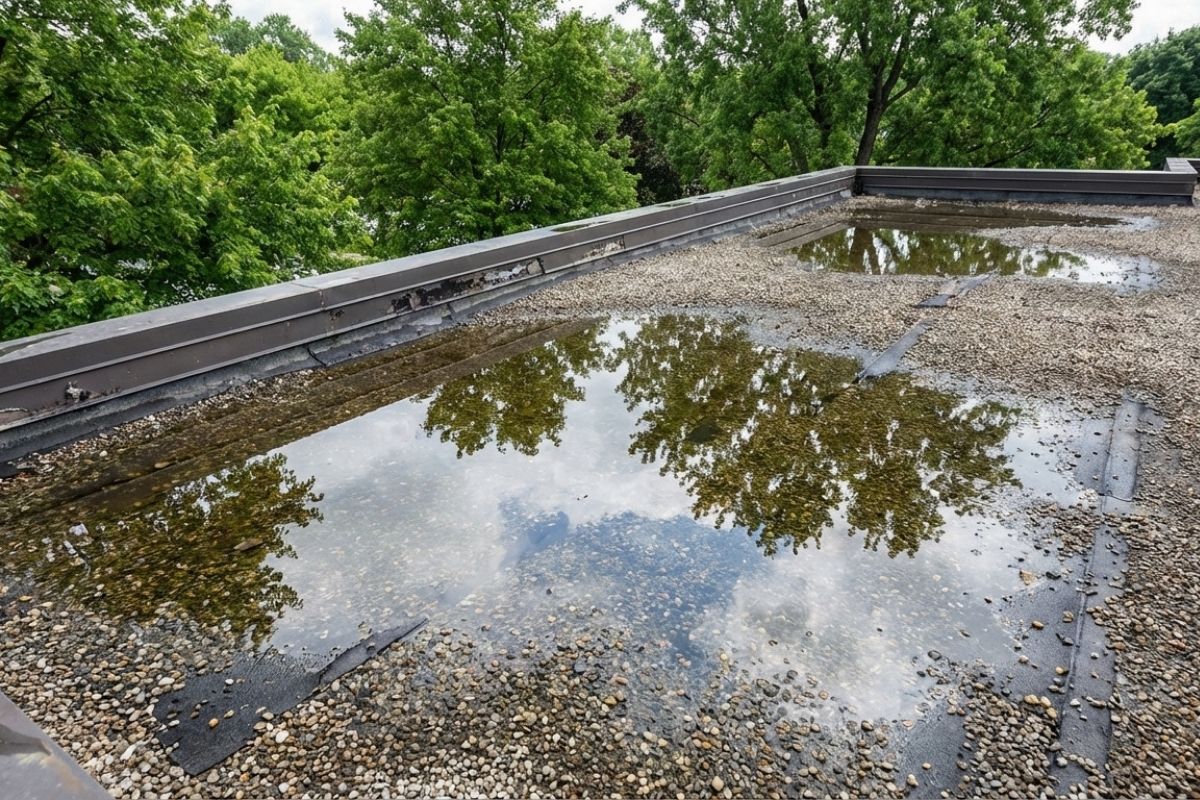
Flat and low-slope roofs are especially vulnerable after monsoons. When you see standing water that doesn’t evaporate within 48 hours, that’s a sign of drainage problems or uneven insulation beneath the roof. Over time, that trapped water weakens coatings, softens foam, and can cause blistering or cracks.
A professional foam or coating specialist can re-level or recoat the surface to restore proper drainage.
6. Watch for Hail Damage
Not every monsoon brings hail, but when it does, it’s destructive. On shingle roofs, look for dark circular dents or granule loss. On foam or coatings, check for pockmarks or exposed areas. Tile roofs may show small chips or cracks that seem harmless but can widen over time with heat and rain cycles.
If you suspect hail, get a professional inspection and document everything for insurance — especially within a few days of the storm.
7. Inspect Roof Edges and Overhangs
Wind-driven rain can hit from all angles, and roof edges take a beating. Soffits, fascia, and drip edges often get loosened or water-stained after storms. In severe cases, water can wick behind paint or stucco and rot the wood underneath.
Keeping these areas sealed and painted helps protect against long-term structural issues.
8. Check Around Solar Panels and Rooftop Equipment
If you’ve got solar panels, AC units, or satellite dishes, these mounting points are potential leak sources. During monsoons, water can infiltrate around penetrations if the flashing or sealant fails. It’s common to find leaks near solar stanchions or HVAC curbs after major storms.
A post-monsoon inspection should include checking every penetration and re-sealing where needed.
9. Smell for Musty Odors
If your attic or top-floor rooms start to smell musty after a storm, that’s a red flag. Even without visible leaks, small roof punctures or flashing gaps can allow enough moisture to cause hidden mold growth.
Addressing it early with roof and attic ventilation improvements can prevent health issues and expensive mold remediation.
10. Schedule a Professional Roof Inspection
Even if you don’t see obvious signs of damage, it’s smart to schedule a professional inspection after major monsoon activity. Experienced roofers know exactly where to look — especially under tiles, around penetrations, and inside the attic. We can find small cracks, lifted flashing, and hidden damage that would otherwise go unnoticed.
At The Arizona Roofer, our post-monsoon inspections are thorough, honest, and fast. We document everything and give you a clear picture of what needs to be fixed — and what doesn’t. No scare tactics, just straight answers.
Pro Tip: Document Storm Damage for Insurance
Take photos right after the storm — both wide shots and close-ups. If repairs are needed, keep receipts and correspondence. This paper trail makes insurance claims smoother and ensures you’re compensated fairly for weather-related damage.
Final Thoughts from The Arizona Roofer
After every monsoon, Phoenix homeowners ask me the same question: “Do I really need a roof inspection?” The answer is simple — if you want to avoid bigger problems later, yes. Arizona’s storms are no joke, and water damage often hides beneath the surface until it’s too late.
At The Arizona Roofer, we make sure your roof is done right and monsoon tight. From small repairs to full replacements, we help you protect your biggest investment — your home.
Don’t wait for small issues to turn into costly repairs.
Book your complimentary roof inspection today Here
Looking for budget-friendly solutions? Check out our low monthly payment plans