Request a Quote Today
"*" indicates required fields
Fast &Expert
Roof Emergency? Do These Three Things Right Now
1. Protect what’s below. Move belongings out of the drip zone and put down containers. If water is pooling in a ceiling bubble, poke a small drain hole in its center to release it — a controlled drip beats a collapsed ceiling.
2. Stay off the roof. Wet tile and wet foam are dangerously slick, and the entry point is almost never directly above where water shows up inside. There’s nothing up there worth an ER visit.
3. Call (480) 435-5190. We respond to roofing emergencies 24/7 across Mesa, Gilbert, Chandler, Tempe, Queen Creek, Scottsdale, and Apache Junction. We’ll stabilize the roof, stop the water, and photograph everything from the first hour — so whether this becomes a small repair or an insurance conversation, you’re holding professional documentation.
During monsoon season, storm calls stack up fast. Active interior leaks get priority — say so when you call.
After the Emergency: Fixing the Cause, Not the Symptom
Stopping the water is triage. What happens next is what separates a real repair from a repeat customer for leaks.
Here’s what years of investigating failed roofs as forensic inspectors has taught us: most “repairs” we examine never touched the actual problem. A leak appears in the hallway; someone smears mastic on the nearest pipe jack; the water was actually entering at a cracked valley twelve feet upslope. The leak returns with the next storm — now with rotted decking underneath.
Water travels. It enters at one point, runs along underlayment and framing, and surfaces somewhere else entirely. Finding the true entry point is diagnostic work — the same discipline we apply as expert witnesses when insurers and attorneys need to know why a roof really failed. Every repair we perform starts with that diagnosis, shown to you in photos, explained in plain language. That’s why our repairs stay fixed.
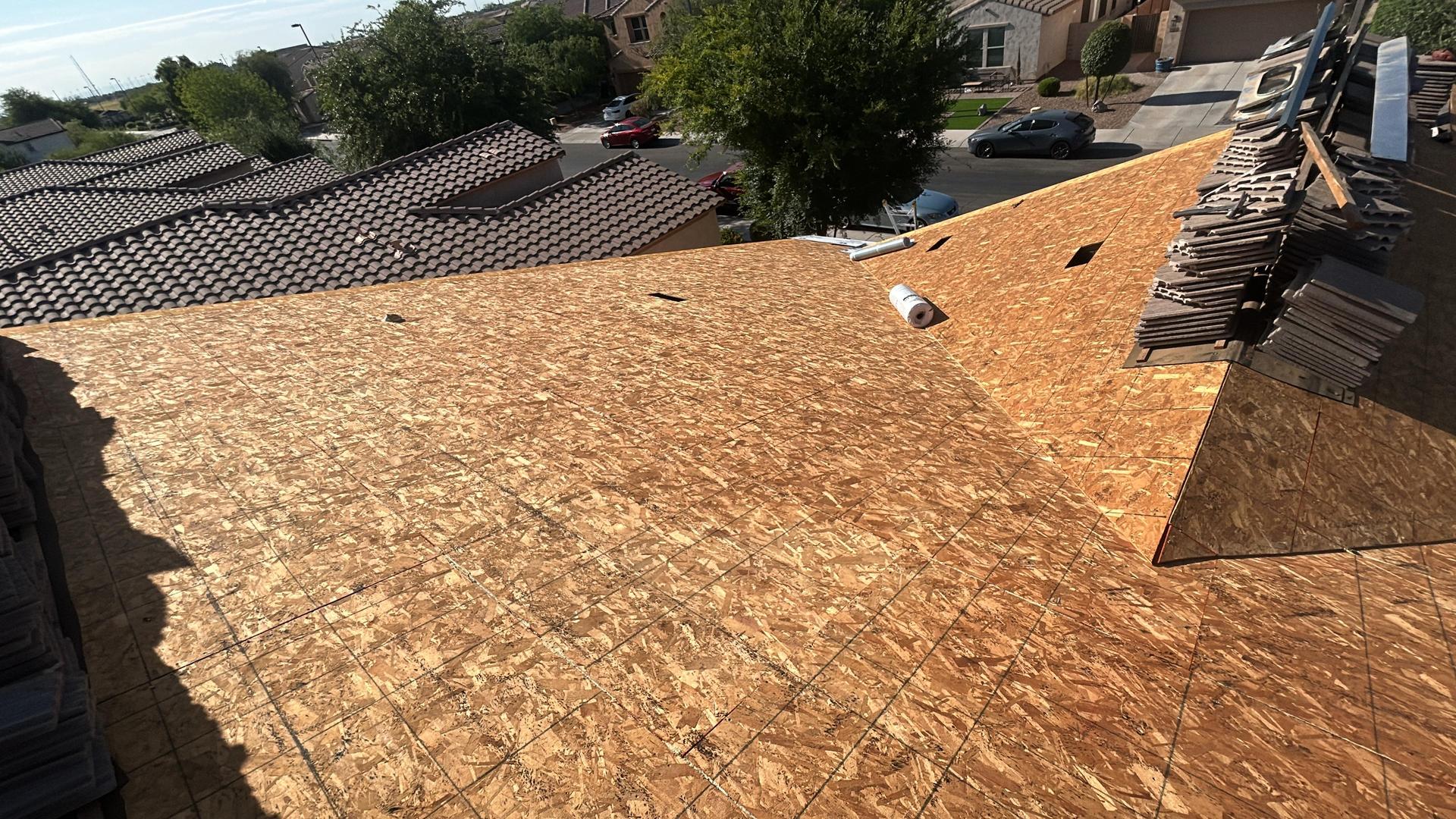
Repairs We Handle
- Emergency leak response and temporary stabilization — 24/7, all roof types
- Roof leak diagnosis and permanent repair — tile, shingle, foam, and flat roofs
- Monsoon and storm damage — displaced tiles, wind-lifted shingles, impact damage, debris strikes
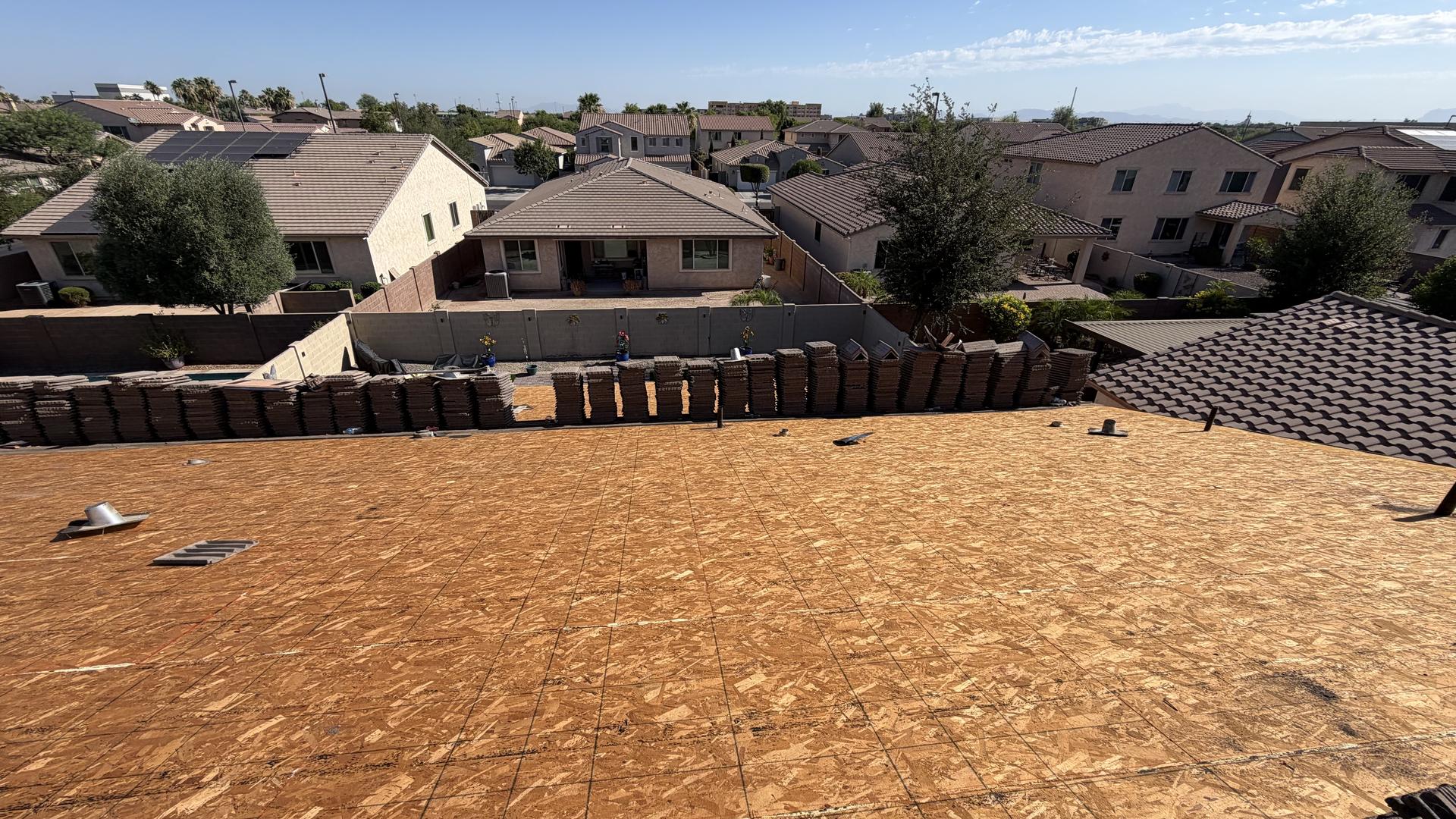
- Tile repairs — broken and slipped tiles, failed hips and ridges, deteriorated mortar
- Shingle repairs — wind damage, exposed fasteners, failed pipe jacks and flashings
- Foam and flat roof repairs — blisters, coating failures, ponding-related deterioration, seam issues
- Flashing and penetration repairs — valleys, walls, chimneys, skylights, vents: where roofs actually leak
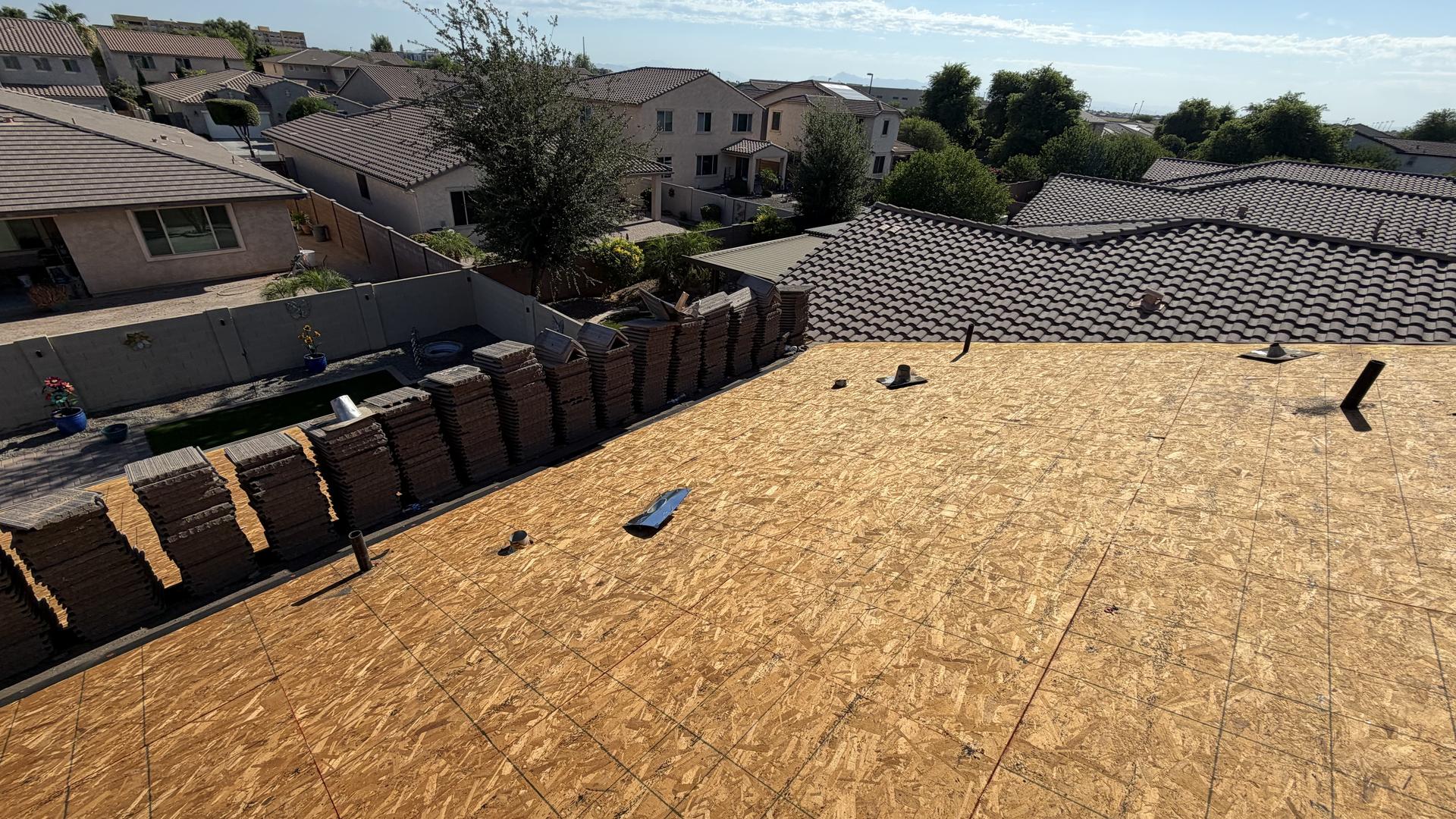
- Fascia and decking repair — including dry rot found during repair work, photographed and approved by you before replacement
Storm Damage and Insurance: The Straight Story
After a big monsoon, the door-knockers arrive — out-of-state crews promising “free roofs” and offering to “handle your insurance claim” or “cover your deductible.” Understand this clearly: those practices are illegal in Arizona, and homeowners who sign those contracts are the ones left exposed when it unravels.
What we do instead is what’s actually valuable: document your damage to a forensic standard. Thorough photos, factual findings, a professional report you can submit with a claim if a claim is warranted — and an honest answer if the damage doesn’t justify one. Your insurance decision stays yours, made with real information. That’s not just our compliance policy; it’s the reason our documentation carries weight when it matters.
Honest Repair Advice — Even When It Costs Us
Not every aging roof needs replacement, and not every leak justifies pouring money into a roof at end-of-life. If your roof has serviceable years left, we’ll repair it and tell you what to watch. If repair money would be throwing good after bad, we’ll show you the photos that prove it and walk through options — including financing that makes the right fix workable monthly instead of all at once.
What you’ll never get: a repair visit that mysteriously becomes a replacement pitch at your kitchen table. The diagnosis drives the recommendation — never the other way around.
Book Your Free Roof Diagnostic
Call (480) 435-5190
Repair & Emergency Questions, Answered
How fast can you get here?
For active leaks and storm emergencies, we respond across the East Valley call (480) 435-5190 rather than using the contact form. For non-emergency repairs, we’ll schedule your diagnostic promptly, usually within days.
How much does a roof repair cost in Arizona?
It depends on what’s actually wrong — which is why we diagnose before we quote. Straightforward tile or shingle repairs often run a few hundred dollars; flashing rebuilds and decking work run more. What we promise: a documented diagnosis first, a clear price before work begins, no surprise add-ons.
My roof is leaking but it hasn’t rained. How?
More common than you’d think. Failed pipe seals, AC condensate lines, condensation, and monsoon water still migrating through saturated layers days after a storm can all surface in dry weather. Half of the “roof leaks” we diagnose aren’t roof leaks at all — which is exactly why diagnosis comes first.
Should I file an insurance claim for roof damage?
File when damage is substantial relative to your deductible — and only after you know what’s actually damaged. We’ll document everything so you can decide with real information. We won’t negotiate your claim or offer to eat your deductible; both are illegal in Arizona, and any contractor offering them is putting you at risk, not doing you a favor.
Do you repair roofs you didn’t install?
Constantly — it’s most of our repair work. And if we find installation defects on a newer roof, we document them; that record may matter for your warranty claim against the original installer.
Can you just tarp my roof until I decide what to do?
Yes — emergency stabilization is exactly that: stop the intrusion now, decide the permanent fix without water pouring in. We’ll document the damage at the same visit so you’re deciding from facts, not fear.