How Do I Repair My Roof in Arizona?
TL;DR
The most important roof repair tip in Arizona is speed. Fix small damage the week you find it, because our sun and monsoons turn a $300 repair into a $3,000 repair faster than any climate in the country. In addition, check your roof every spring and fall — and never let a doorknocker turn a repair into an insurance claim.
How do I repair my roof in Arizona?
Inspect twice a year — spring before monsoon season, fall after — and repair damage immediately. Small repairs like cracked tiles, lifted shingles, and worn flashing are affordable when caught early. That’s it. That’s the tip. Everything else is detail.
Why Speed Matters More Here Than Anywhere Else
I’ve been on roofs for over 40 years, and I’ll tell you the truth: most of the expensive repairs I get called out to in Mesa, Gilbert, Chandler and around the Valley started as cheap ones. For example, somebody saw a cracked tile in March and figured it could wait. By September, the underlayment under that tile was cooked and the drywall in the hallway was stained.
So here’s what matters for each roof type.
Tile Roofs: The Tile Isn’t the Waterproofing
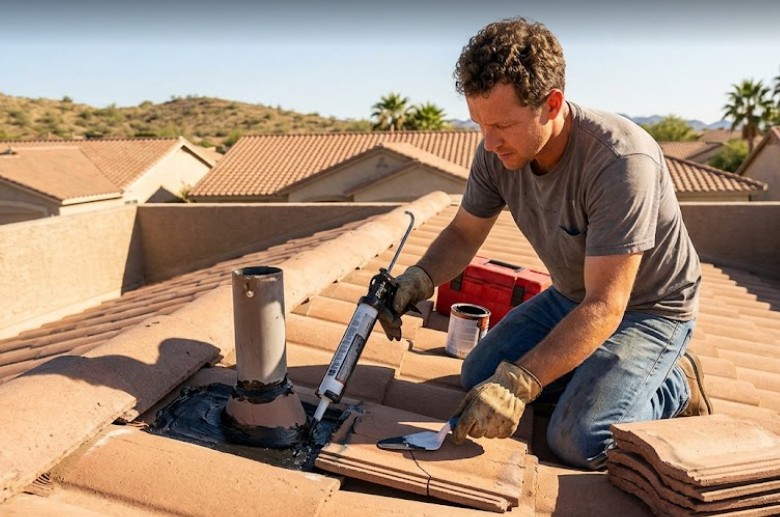
If you have a tile roof, understand this one thing: the tile is not what keeps water out of your house. The underlayment beneath it is. A cracked or slipped tile exposes that underlayment to UV, and Arizona sun destroys exposed underlayment in months, not years. Therefore, replace broken tiles quickly — and stay off the roof yourself. Concrete tiles get brittle with age and break more easily than people expect, especially when they’re wet.
Shingle Roofs: Read the Early Warnings
If you have shingles, walk the yard after every wind event and look up. Lifted shingles, missing tabs, granules piling up at the downspouts — those are your early warnings. However, if your shingles are coming off in sheets during ordinary storms, the wind isn’t the problem. Overdriven fasteners and high nailing are two of the most common installation defects I documented as a forensic inspector, and both void the shingle’s wind rating from day one.
Flat and Foam Roofs: Stay on the Schedule
If you have a flat or foam roof, watch for ponding water that sits more than 48 hours, coating that’s chalking or wearing thin, and cracks around vents and penetrations. Foam roofs are great in our climate, but they run on a maintenance schedule. Recoat on time, and a foam roof is nearly renewable forever. Skip it, however, and you’re buying a new roof.
Where Leaks Actually Start
On every roof, the leaks I trace almost never come from the middle of the roof. Instead, they come from flashing — chimneys, vents, wall transitions. So if you only look at one thing, look there.
The Doorknocker Rule
Last tip, and it matters: if someone knocks on your door after a storm and offers to “handle your insurance claim,” close the door. In Arizona, a contractor negotiating your claim runs into ARS § 20-321 — that’s public adjusting, and it requires a license most roofers don’t have. A legitimate roofer documents the damage and fixes the roof. Meanwhile, you handle your own claim.
Key Takeaways
Speed is everything — small repairs done fast stay small. Tile protects the underlayment; the underlayment protects the house. Most leaks start at flashing and penetrations. Finally, roofers repair roofs; they don’t negotiate insurance claims.
FAQ
How often should I inspect my roof in Arizona?
Twice a year — spring and fall — plus after any major monsoon storm.
Can I walk on my own tile roof?
Don’t. Aged concrete tile breaks easily under foot traffic, and you’ll create the damage you were looking for.
How much does a small roof repair cost in the East Valley?
Most single-issue repairs run in the hundreds. However, the same issue ignored through a monsoon season routinely runs into the thousands.
Need a Straight Answer About Your Roof?
Call The Arizona Roofer at (480) 435-5190 or visit www.thearizonaroofer.com. Serving Mesa, Chandler, Gilbert, Queen Creek, San Tan Valley, Tempe, Scottsdale, Apache Junction and the Phoenix Valley area.